
November 20, 2026
View or download a transcript of this episode
“These practices are to support us in our life, but our life is also our practice.” — Willem Kuyken
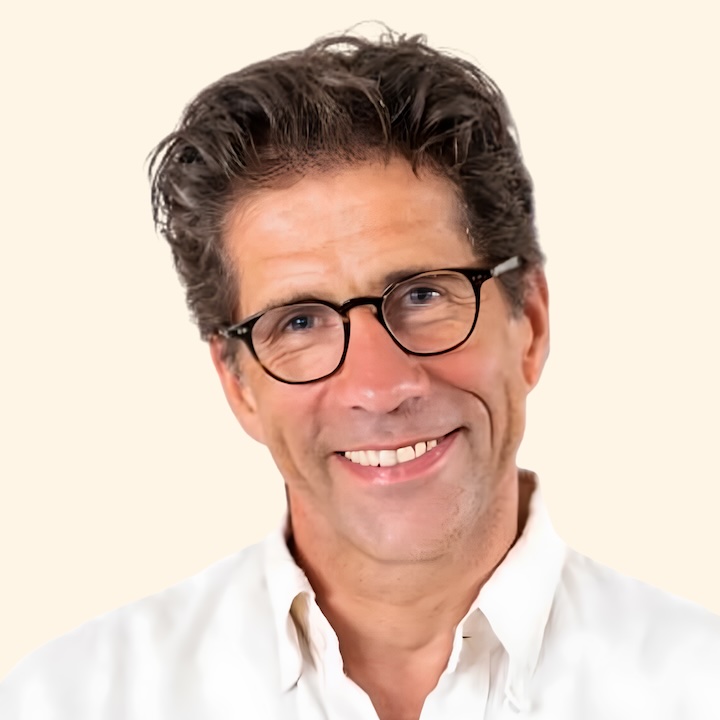
Dr. Willem Kuyken, a clinical psychologist at the University of Oxford, led MYRIAD, the largest trial of mindfulness training in schools, with more than 8,000 students aged 11 to 14 in 84 UK schools. In this conversation Willem tells David what the trial found. Students who were taught mindfulness by their own teachers did no better than students whose schools carried on with their usual social-emotional teaching, and most of them practiced just once. The teachers, who learned mindfulness for themselves first, did benefit. Willem and David talk about the meeting where the results were revealed, whether mindfulness training can be prescribed or has to be chosen, what protected young people’s mental health through the pandemic, and how Willem would design the trial today. They also talk about parenting, two small practices from Willem’s book Mindfulness for Life, and what the London Underground taught members of the UK Parliament about waking up. David ends the show with a short 2-minute guided practice drawn from Willem’s book Mindfulness for Life: checking in on the day, noticing what you appreciate, and setting an intention.
In this episode:
- How Willem came to mindfulness research: a three-hour Jon Kabat-Zinn keynote and a drink with John Teasdale
- Aaron “Tim” Beck’s armchair: the founder of cognitive therapy meditated after lunch
- Inside MYRIAD: why ages 11 to 14, and why classroom teachers taught the 10 lessons
- The meeting where the results were revealed as “Group A” and “Group B”
- Students were asked to practice every day. Most practiced once.
- Can mindfulness training be prescribed, or do people have to opt in?
- What the teachers gained, and Tish Jennings’s “prosocial classroom”
- Trickle down, trickle out: schools as “hothouses of academic pressure”
- An ethical compass: what contemplative science can add to education
- For parents: children pick up what we model, more than what we say
- A bedtime family meditation at David’s house
- Dreaming up MYRIAD 2: designed with young people, in primary schools, from the outside in
- Two practices from Mindfulness for Life: starting and ending the day with intention, and appreciation
- A passing train, the London Underground, and mindfulness classes in Parliament
- The measurement problem: mindfulness has no “10,000 steps”
- David’s takeaway, a 2-minute guided practice from Mindfulness for Life: check in, appreciate, set an intention
About the guest
Willem Kuyken, PhD, DClinPsy, is the Ritblat Professor of Mindfulness and Psychological Science at the University of Oxford, where he leads the University of Oxford Mindfulness Research Centre. A clinical psychologist who trained in cognitive behavioral therapy with Aaron T. Beck, he studies how to prevent depression and promote mental health and flourishing across the lifespan. His trials helped establish mindfulness-based cognitive therapy as a way to prevent depressive relapse in adults, and he led MYRIAD, the largest trial of mindfulness training in schools. He has published more than 150 journal articles, and his books include Mindfulness for Life (2024) and, with Christina Feldman, Mindfulness: Ancient Wisdom Meets Modern Psychology (2019).
About the host
David Creswell, PhD, is the William S. Dietrich II Professor of Psychology and Neuroscience at Carnegie Mellon University, where he directs the Health and Human Performance Lab, and host of the Mind & Life Podcast.
People mentioned in this episode
Willem and David mention a lot of people along the way. Here’s who they are, in the order they come up, with a place to start if you want to learn more.
- Lisa Feldman Barrett, University Distinguished Professor of Psychology at Northeastern University and author of How Emotions Are Made. David quotes her line “the data is the data,” and Willem picks it up. More: Lisa Feldman Barrett – Your Emotions Aren’t What You Think on the Mind & Life Podcast (2021); her website.
- Jon Kabat-Zinn, founder of Mindfulness-Based Stress Reduction (MBSR). Willem traces his start in this field to a three-hour keynote Jon gave at a conference in the 1990s, and he practiced with Jon’s body scan recording most days for about a decade. More: Jon Kabat-Zinn – Many Doors, One Room on the Mind & Life Podcast (2026); Jon’s website.
- John Teasdale, a cognitive scientist formerly at the UK Medical Research Council’s Cognition and Brain Sciences Unit in Cambridge, and one of the three developers of mindfulness-based cognitive therapy (MBCT). Over a drink at that same conference, he invited Willem to join the MBCT work. More: What Happens in Mindfulness (2022), his book on how mindfulness works.
- Mark Williams, Emeritus Professor of Clinical Psychology at the University of Oxford and an MBCT co-developer. More: Mindfulness: Finding Peace in a Frantic World, his book with Danny Penman, with free guided meditations.
- Zindel Segal, Distinguished Professor of Psychology in Mood Disorders at the University of Toronto Scarborough and the third MBCT co-developer. More: Zindel Segal – Mindfulness and Depression on the Mind & Life Podcast (2022).
- Aaron T. “Tim” Beck (1921–2021), the University of Pennsylvania psychiatrist who founded cognitive behavioral therapy. Willem trained with him and tells the story of the armchair where Beck meditated after lunch. More: Dr. Aaron T. Beck at the Beck Institute.
- Steven C. Hayes, professor emeritus at the University of Nevada, Reno, who co-developed acceptance and commitment therapy (ACT). Willem echoes his view that the field isn’t well served by separate therapy camps. More: ACT for the Public, from the Association for Contextual Behavioral Science; A Liberated Mind (2019), Hayes’s book on ACT for a general audience.
- Obi Ukoumunne, Professor in Medical Statistics at the University of Exeter and MYRIAD’s trial statistician. He presented the results to the team as “Group A” and “Group B” and told them not to explain away the null result. More: his profile at NIHR ARC South West.
- Mark Greenberg, founding director of the Edna Bennett Pierce Prevention Research Center at Penn State, a leader in social-emotional learning research, and a MYRIAD co-author. Willem credits him for the evidence that social-emotional learning works in schools. More: his Penn State profile.
- Patricia “Tish” Jennings, Professor of Education at the University of Virginia, who led the team that developed CARE, a mindfulness-based professional development program for teachers. Willem cites her work on the “prosocial classroom.” More: Tish Jennings – Contemplative Education on the Mind & Life Podcast (2022).
- Christina Feldman, a meditation teacher since 1976, co-founder of Gaia House in England, and a guiding teacher at the Insight Meditation Society. She and Willem co-wrote Mindfulness: Ancient Wisdom Meets Modern Psychology, the source of the line “If you don’t find ethics uncomfortable, you haven’t understood ethics.” More: her teacher page at Bodhi College.
- Eric Garland, professor of psychiatry at UC San Diego and the developer of Mindfulness-Oriented Recovery Enhancement (MORE) for addiction and chronic pain. Willem credits him and Barbara Fredrickson when he describes the appreciation practice. More: Eric Garland – Working with Addiction & Pain on the Mind & Life Podcast (2021).
- Barbara Fredrickson, Kenan Distinguished Professor of Psychology and Neuroscience at UNC–Chapel Hill, best known for the “broaden-and-build” theory of positive emotions. More: her UNC profile.
- Marcus Aurelius, Roman emperor (161–180 CE) and Stoic philosopher, author of the Meditations. Willem traces the practice of starting and ending the day with intention back to him and the Stoics. More: Marcus Aurelius in the Stanford Encyclopedia of Philosophy.
Resources
Studies, books, and programs mentioned in the episode, including the MYRIAD papers David promised to link in the show.
Earlier Mind & Life Podcast episodes referenced in this episode
- Jon Kabat-Zinn – Many Doors, One Room (2026), the conversation Willem has in mind when he says Jon started off this series. It first aired November 6, 2026.
- David Creswell – New Season, New Voice (2026), the season opener that first aired October 23, 2026, where David first previewed the MYRIAD trial.
The MYRIAD trial
- The MYRIAD project (My Resilience in Adolescence), the eight-year project funded by the Wellcome Trust, with the team’s papers and plain-language summaries.
- Kuyken, W., et al. (2022). Effectiveness and cost-effectiveness of universal school-based mindfulness training compared with normal school provision in reducing risk of mental health problems and promoting well-being in adolescence: The MYRIAD cluster randomised controlled trial. Evidence-Based Mental Health, 25(3), 99–109. The main result Willem describes. Across 84 schools and 8,376 students aged 11 to 14, mindfulness training did no better than the schools’ usual social-emotional teaching on depression risk, social-emotional functioning, or well-being a year later. (85 schools were randomized and 84 took part, which is why you hear both numbers.)
- Kuyken, W., et al. (2022). Effectiveness of universal school-based mindfulness training compared with normal school provision on teacher mental health and school climate: Results of the MYRIAD cluster randomised controlled trial. Evidence-Based Mental Health, 25(3), 125–134. The teacher findings: teachers who trained in mindfulness reported less burnout, and school climate improved. Most of these effects had faded a year later.
- Montero-Marin, J., et al. (2023). Do adolescents like school-based mindfulness training? Predictors of mindfulness practice and responsiveness in the MYRIAD trial. Journal of the American Academy of Child & Adolescent Psychiatry, 62(11), 1256–1269. How much the students practiced and what they thought of it. On average they practiced about once outside of class.
- Montero-Marin, J., Hinze, V., Mansfield, K., Slaghekke, Y., Blakemore, S.-J., Byford, S., Dalgleish, T., Greenberg, M. T., Viner, R. M., Ukoumunne, O. C., Ford, T., & Kuyken, W. (2023). Young people’s mental health changes, risk, and resilience during the COVID-19 pandemic. JAMA Network Open, 6(9), e2335016. Willem’s answer to David’s parenting question draws on this study: good relationships at home, a friend to turn to, and a positive school climate protected young people’s mental health through the pandemic.
- Kuyken, W., Weare, K., Ukoumunne, O. C., Vicary, R., Motton, N., Burnett, R., Cullen, C., Hennelly, S., & Huppert, F. (2013). Effectiveness of the Mindfulness in Schools Programme: Non-randomised controlled feasibility study. British Journal of Psychiatry, 203(2), 126–131. The early pilot study that helped make the case for MYRIAD.
- Dunning, D. L., Griffiths, K., Kuyken, W., Crane, C., Foulkes, L., Parker, J., & Dalgleish, T. (2019). Research review: The effects of mindfulness-based interventions on cognition and mental health in children and adolescents – a meta-analysis of randomized controlled trials. Journal of Child Psychology and Psychiatry, 60(3), 244–258. The MYRIAD team’s own review of the evidence in children and adolescents.
Other research discussed in this episode
- Sibinga, E. M. S., Webb, L., Ghazarian, S. R., & Ellen, J. M. (2016). School-based mindfulness instruction: An RCT. Pediatrics, 137(1), e20152532. The paper David calls one of his favorites. Among 300 fifth- to eighth-graders in two Baltimore City public schools, students who got a mindfulness program reported less depression, rumination, and post-traumatic stress than students in a health education class.
- Jennings, P. A., & Greenberg, M. T. (2009). The prosocial classroom: Teacher social and emotional competence in relation to student and classroom outcomes. Review of Educational Research, 79(1), 491–525. Tish Jennings’s “prosocial classroom,” written with Mark Greenberg, whom Willem also credits for the evidence on social-emotional learning.
- Durlak, J. A., Weissberg, R. P., Dymnicki, A. B., Taylor, R. D., & Schellinger, K. B. (2011). The impact of enhancing students’ social and emotional learning: A meta-analysis of school-based universal interventions. Child Development, 82(1), 405–432. Willem says there is “no doubt at all” that social-emotional learning works in schools. This analysis of 213 school programs is the standard reference.
- Shapiro, S. L., Carlson, L. E., Astin, J. A., & Freedman, B. (2006). Mechanisms of mindfulness. Journal of Clinical Psychology, 62(3), 373–386. The definition of mindfulness Willem says he has always loved: intention, attention, and attitude.
- Garland, E. L., Farb, N. A., Goldin, P. R., & Fredrickson, B. L. (2015). Mindfulness broadens awareness and builds eudaimonic meaning: A process model of mindful positive emotion regulation. Psychological Inquiry, 26(4), 293–314. Willem credits Eric Garland and Barbara Fredrickson when he describes the appreciation practice. This paper explains how appreciation “broadens and builds.”
- Lindsay, E. K., Chin, B., Greco, C. M., Young, S., Brown, K. W., Wright, A. G. C., Smyth, J. M., Burkett, D., & Creswell, J. D. (2018). How mindfulness training promotes positive emotions: Dismantling acceptance skills training in two randomized controlled trials. Journal of Personality and Social Psychology, 115(6), 944–973. Willem adds “your own work as well, David”; it was this paper, which sampled people’s emotions in daily life and found that equanimity-focused mindfulness training increased positive emotions.
- Kuyken, W., Hayes, R., Barrett, B., et al. (2015). Effectiveness and cost-effectiveness of mindfulness-based cognitive therapy compared with maintenance antidepressant treatment in the prevention of depressive relapse or recurrence (PREVENT): A randomised controlled trial. The Lancet, 386(9988), 63–73. The adult depression research David briefly mentions: mindfulness-based cognitive therapy, with support to come off medication, did about as well as staying on antidepressants at preventing relapse over two years.
- Segal, Z. V., Williams, J. M. G., & Teasdale, J. D. (2013). Mindfulness-Based Cognitive Therapy for Depression (2nd ed.). Guilford Press. The program John Teasdale invited Willem to work on over a drink at a conference in the 1990s.
Willem’s books and work
- Kuyken, W. (2024). Mindfulness for Life. Guilford Press. The source of the two practices Willem shares: starting and ending the day with intention, and the appreciation practice.
- Feldman, C., & Kuyken, W. (2019). Mindfulness: Ancient Wisdom Meets Modern Psychology. Guilford Press. The book Willem wrote with dharma teacher Christina Feldman.
- Willem’s page at the University of Oxford and the University of Oxford Mindfulness Research Centre
- Mindfulness in the UK Parliament, on the classes Willem’s centre taught for members of Parliament and their staff, where the rumble of the Underground became a reminder to wake up
Mind & Life
- A Bold New Chapter for the Mind & Life Institute (June 2025), the strategy behind Willem’s and David’s comments on systems change and where the field goes next
More from David
- Health and Human Performance Lab, David’s lab website at Carnegie Mellon University
- Equa Health, the mindfulness app David co-founded.
Contact
- Write to us at podcast@mindandlife.org.
__________________________________________________________________________
Disclaimer: The views expressed by the host and guests are their own and do not necessarily reflect the positions of the Mind & Life Institute. Discussion of commercial products, services, or organizations does not constitute an endorsement by Mind & Life. Discussion of Equa Health in this episode does not constitute an endorsement by the Mind & Life Institute.
Disclosure: David Creswell is co-founder and Chief of Science of Equa Health, a meditation app company, and has a financial interest in it. He discusses this role in the episode.
__________________________________________________________________________